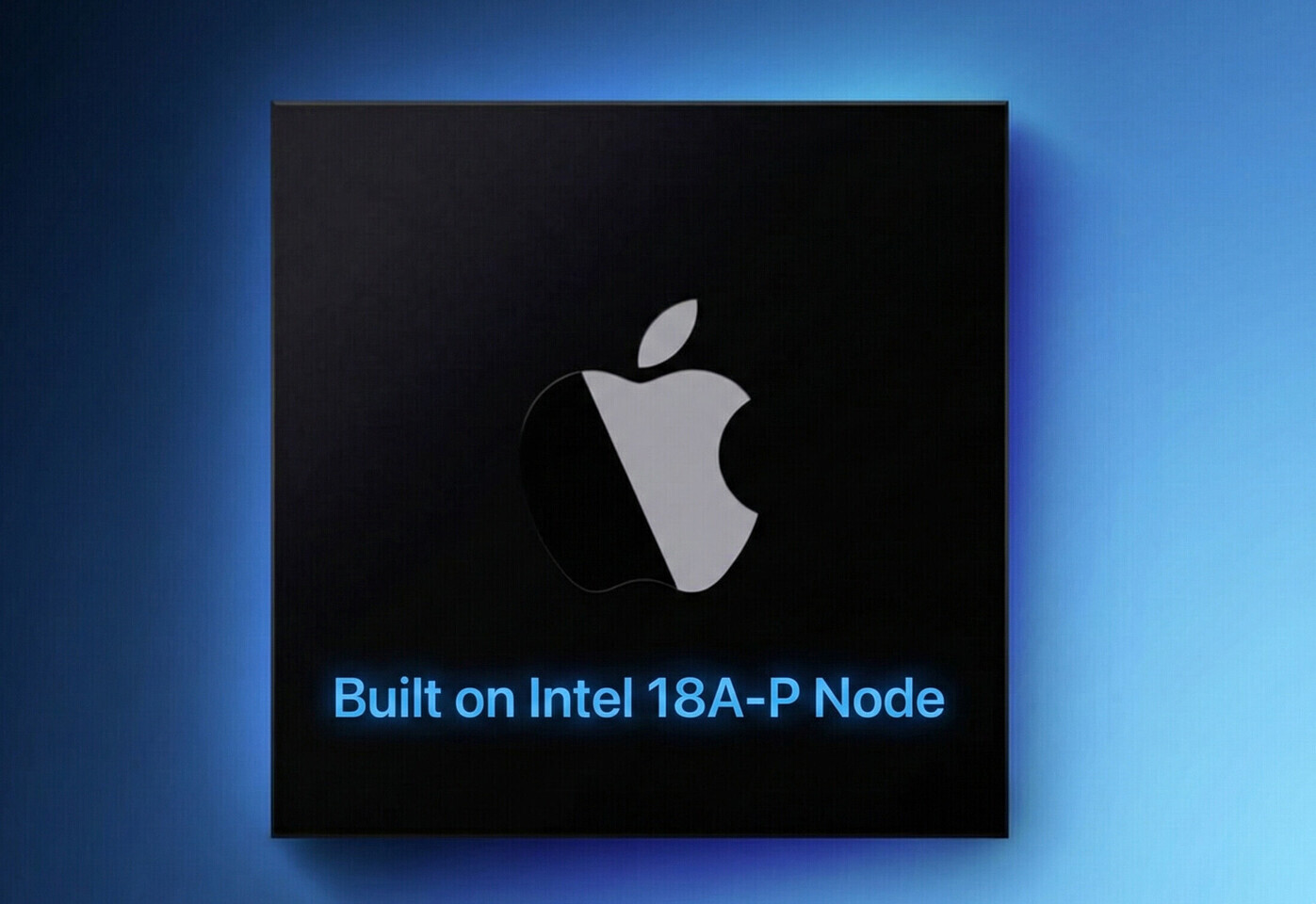
Apple Explores New Manufacturing Partners for Next-Generation Apple Silicon Chips
Apple has long relied on TSMC (Taiwan Semiconductor Manufacturing Company) to produce its custom Apple Silicon chips, which power a wide range of devices from iPhones and iPads to MacBooks and high-performance Macs. However, recent developments indicate that Apple is actively seeking to diversify its chip manufacturing partners, with both Intel Foundry and Samsung Foundry emerging as potential collaborators for future Apple Silicon production.
Intel’s 18A-P Process: A Promising Option for Apple Silicon
According to recent reports, Apple has been evaluating Intel’s advanced 18A-P process design kits (PDKs) as part of its strategy to secure cutting-edge semiconductor manufacturing. Apple has already tested version 0.9.1 of Intel’s 18A-P PDK, and the results have reportedly met the company’s stringent requirements for performance, density, and power efficiency. This positions Intel as a strong candidate to manufacture Apple’s advanced node chips as early as 2027.
Apple is now awaiting the release of Intel’s 18A-P PDK version 1.0, which is expected to become available to partners in the first half of 2026. Once this milestone is reached, Apple plans to begin production with its entry-level M-series chips, which are used in devices like the MacBook Air and iPad Pro. The 18A-P node is particularly attractive due to its ability to deliver a 9% performance boost at the same power level, or achieve 18% power savings at the same performance, compared to Intel’s standard 18A process. Enhanced thermal conductivity in the 18A-P process also promises improved heat dissipation and overall performance, potentially surpassing what Apple currently achieves with TSMC’s 3 nm technology in the M5 SoC.
Samsung Foundry and Advanced Packaging Alternatives
In addition to Intel, Samsung Foundry is being considered as another alternative for Apple’s chip manufacturing needs. Samsung’s SF2 2 nm process is highlighted as a viable option, especially as Apple looks to diversify its supply chain. While Samsung is not as well-known for advanced packaging technologies as Intel, Apple could leverage its partnership with Amkor to handle the packaging of Samsung-manufactured dies.
For chips produced by Intel, Apple may take advantage of advanced packaging solutions such as EMIB (Embedded Multi-die Interconnect Bridge) and Foveros 3D packaging. These technologies enable more complex and efficient chip designs, supporting Apple’s ongoing innovation in device performance and efficiency.
Strengthening Supply Chain Resilience and Geopolitical Stability